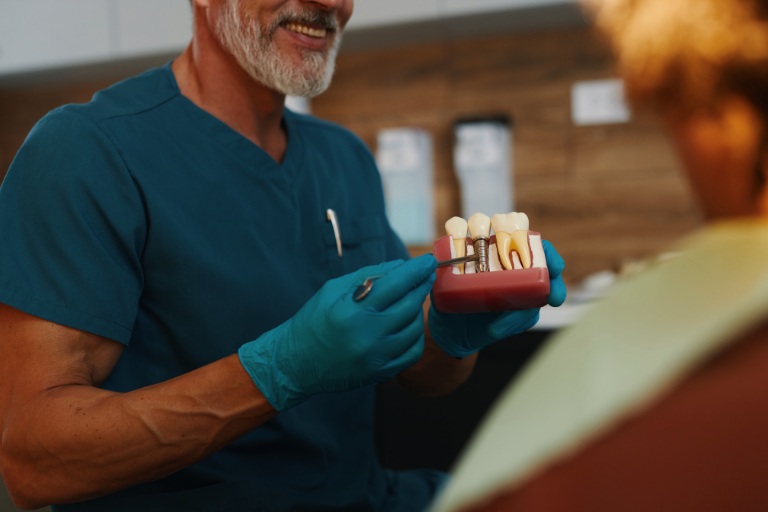
When replacing missing teeth, there are several options available; among them, dental implants are the most reliable. For many patients in Alpharetta and surrounding communities, choosing between dental implants and bridges depends on long-term comfort, durability, and oral health goals. Unlike dental bridges, which involve preparing existing teeth to support the dental work, implants actually replace missing teeth at the root level.
In most cases, patients prefer dental implants to dental bridges not only for the advantages they offer but also because they boost confidence. However, what exactly sets implants apart as the better alternative? In this blog, we will explore why dental fixtures are the better option for a permanent dental solution.
What Are Dental Implants?
Dental implants are made of titanium and are placed in the jawbone where the tooth root would naturally be. Eventually, the jawbone integrates with the implant through a process called osseointegration, providing a strong support system for dentures, such as crowns or bridges. Rather than conventional alternatives, endosseous implants are more similar to real teeth because they are implanted in the jawbone, allowing the jaw to function naturally.
Traditional fixed bridges are anchored by neighboring teeth to support a fixed tooth. Although a fixed bridge can successfully replace missing teeth, it is not a completely fixed restoration because it allows modification of adjacent teeth to support the fixed tooth. This can cause these teeth to weaken over time.
What Makes Dental Implants the Ideal Solution?
The attributes of durability, comfort, bone preservation, and aesthetics make dental implants in Alpharetta one of the most popular options for patients seeking a replacement for a missing tooth. It is, however, necessary for a patient to choose the right solution for the right person, and although a traditional bridge can be an appropriate choice, a dental implant provides a far superior long-term replacement.
1. Comfort and Functionality
Dental fixtures provide much greater comfort and functionality than traditional bridges. Because they are embedded in the jaw, just like tooth roots, these implants function as teeth, allowing the patient to chew, talk, and smile as he or she wishes. There will be no movement of the dental implant, unlike with a bridge, when the patient eats sticky or hard foods.
Moreover, implants do not demand any special dental care. Compared with regular bridges, which may sometimes require adjustments or extra cleaning to prevent plaque buildup or decay around the teeth that support them, implants can be cared for just like natural teeth.
2. The Longevity of Dental Implants
One of the greatest benefits of endosseous implants is their long-term durability and ability to last a lifetime when properly cared for. Bridges are fixed with adhesive/dental crowns, which can loosen or even break over time, requiring replacement. Patients will thereby be forced to spend more often on replacements.
The ability of implants to last longer cannot be attributed to conventional bridge work that may last only 10 to 15 years before needing to be replaced due to wear and tear. Another dental health benefit of their long-term nature is that they establish a firm hold in the jaw, just as natural teeth do.
3. Preservation of Bone Structure
The next important benefit of fixtures is their ability to maintain the jawbone in good condition. When a tooth is missing from a person’s mouth, their jawbone will start to weaken because chewing sends signals to this area. This may cause more problems in a person’s mouth, as it may start to sag and fall. Implants are very important because they can help keep this process in check by acting similarly to tooth roots.
Conventional bridges, although effective at restoring the visible part of the tooth, fail to address bone loss. Once the bridge is placed, as the support comes from the other teeth, not the jawbone, the jawbone will continue to weaken, potentially leading to issues with the teeth themselves.
4. Aesthetic Appeal
Esthetic Advantage: Implants offer tremendous esthetic advantages. Since implants merge with the bones in your jaw, they offer an entirely natural-looking and feeling remedy for those with tooth loss. With implants, you can have an artificial tooth set atop the implant, designed to imitate the color, shape, and size of your other teeth.
Though bridges work well to fill the space, the difference in appearance can be evident because they rest on surrounding teeth, which might make the work look less natural. In the long run, even the crowns that hold the bridge in place will wear down and may create some inconsistencies in the teeth’s appearance.
Begin Your Path to a Renewed Smile
Dental implants offer not only aesthetic benefits but also functional success, serving as a long-lasting solution to tooth loss. If you are considering endosseous implants, Alpharetta dentistry offers, do not wait.
At Johns Creek Dental Studio, our team ensures the success of the dental implant procedure. Our team will assist you throughout the entire dental implant procedure, from pre-procedure to follow-up. Give us a call today to schedule your appointment and begin your journey towards a brighter, more confident smile. We are here to restore your smile!
Questions People Ask About Dental Implants
1. How long do dental implants last?
Dental implants are a long-lasting solution that can last a lifetime with proper care. Unlike bridges, they don’t need frequent replacements, offering a durable, stable, and permanent option for tooth restoration.
2. Are dental implants painful?
The dental implant procedure is usually performed under local anesthesia, minimizing discomfort. Most patients feel only slight soreness after the procedure, which can be managed with over-the-counter pain relievers and usually subsides within a few days.
3. How do dental implants compare to bridges?
Dental implants offer greater durability, function, and aesthetic appeal compared to bridges. They preserve jawbone health, require less maintenance, and provide a permanent solution, unlike bridges, which may need replacing after 10–15 years and depend on surrounding teeth.
4. Can dental implants be done on any tooth?
Yes, dental implants can replace single or multiple missing teeth. They are versatile and can be used in various locations, from front teeth to back molars, providing a natural and functional solution for different types of tooth loss.
5. How do I care for my dental implants?
Caring for dental implants is similar to caring for natural teeth. Brush twice daily, floss regularly, and visit your dentist for routine check-ups. Maintaining good oral hygiene helps keep your implants healthy and ensures their long-term success.