
Most people do not intentionally ignore dental problems. Life gets busy. Work schedules fill up quickly. Family responsibilities take priority. Sometimes, mild tooth sensitivity or occasional gum irritation feels easy to postpone. However, many oral health problems continue progressing quietly beneath the surface. What starts as a small concern can eventually become painful, stressful, and much harder to treat.
Many patients who visit a dentist in Alpharetta are surprised to learn how quickly untreated dental issues can worsen. The truth is that the risks of delayed dental treatment are often much more serious than people expect. Early care not only protects your smile but also helps prevent infections, tooth damage, and long term oral health complications.
Why People Often Delay Dental Care
There are several reasons patients postpone treatment. Dental anxiety remains one of the most common. Some people avoid appointments because of a previous negative experience. Others hope discomfort will disappear on its own.
Busy schedules also play a major role. Between commuting, school activities, and demanding workdays around Alpharetta, many adults delay appointments with a dentist in Alpharetta until symptoms become difficult to ignore.
Financial concerns can also contribute to delaying dental treatment. Unfortunately, waiting often allows problems to become more advanced. A small issue that could have required minimal treatment may eventually require a more extensive procedure.
Understanding the risks of delaying dental care helps patients make informed decisions before minor concerns become emergencies.
What Happens When Cavities Go Untreated?
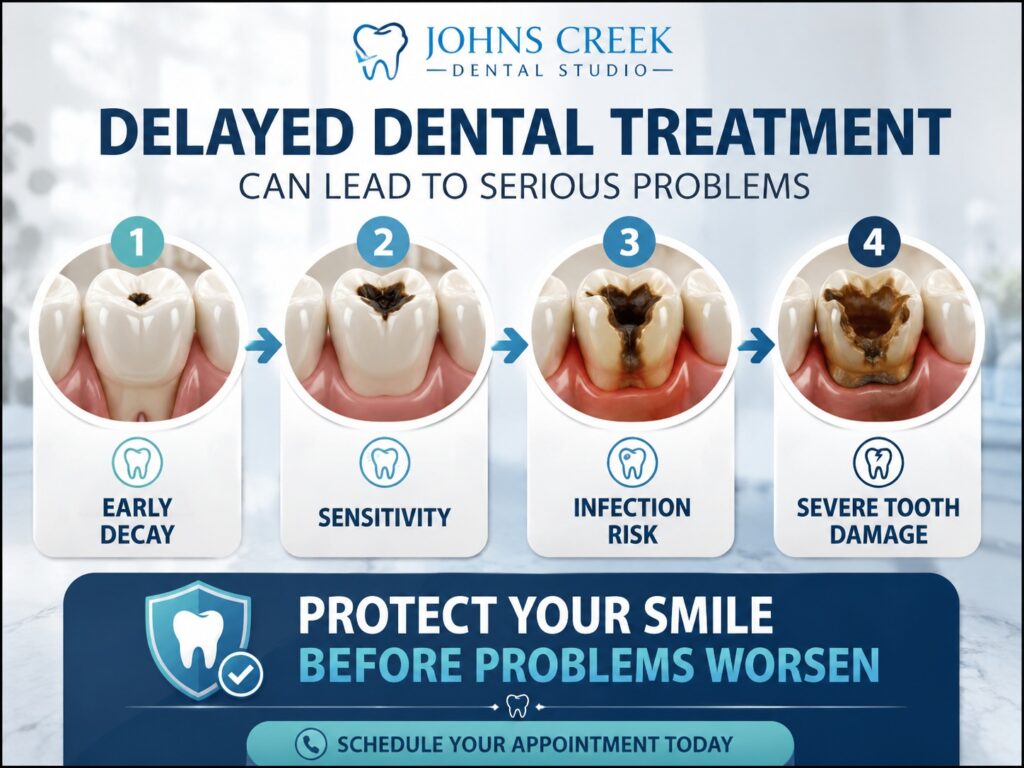
Cavities rarely stop progressing on their own. Tooth decay begins by damaging the outer enamel layer. During the early stages, patients may not notice any symptoms. Over time, bacteria continue moving deeper into the tooth structure.
As untreated tooth decay worsens, patients often begin experiencing:
- Sensitivity to hot or cold foods
- Pain while chewing
- Sharp discomfort when eating sweets
- Visible dark spots on teeth
A cavity getting worse can eventually reach the inner pulp of the tooth, where nerves and blood vessels are located. At that point, inflammation and infection become much more likely.
According to the Centers for Disease Control and Prevention, untreated cavities remain one of the most common chronic health conditions among adults in the United States. Early treatment helps prevent avoidable complications and preserves more of the natural tooth structure.
Can Delayed Dental Care Lead to Infection?
Yes. One of the most serious consequences of delayed dental care involves infection.
When bacteria reach the deeper layers of a tooth, an abscess may develop near the root. The risks of tooth abscesses should never be underestimated, as infections can spread into surrounding tissues if left untreated.
Common dental infection symptoms include:
- Persistent throbbing pain
- Swelling around the gums or jaw
- Sensitivity to pressure
- Fever
- Bad taste in the mouth
- Facial swelling
Some patients attempt to manage severe discomfort with pain medication while avoiding professional care. However, treatment for severe tooth pain usually requires addressing the underlying infection directly.
In some cases, treatment for a tooth infection may involve root canal therapy or removal of the damaged tooth to prevent the spread of bacteria. Seeking care early often prevents infections from becoming significantly more complicated.
How Gum Disease Progresses Over Time
Gum disease often progresses slowly, making it easy to ignore in the early stages.
Gingivitis commonly begins with mild inflammation caused by plaque buildup around the gums. Patients may notice occasional bleeding while brushing or flossing. Because symptoms can seem minor initially, many people delay scheduling an evaluation.
Without treatment, gum disease can advance deeper below the gumline and begin damaging the bone that supports the teeth.
Over time, oral health complications associated with untreated gum disease may include:
- Chronic gum inflammation
- Gum recession
- Loose teeth
- Persistent bad breath
- Bone loss
- Tooth loss
Research has also connected advanced gum disease with certain systemic health concerns, including diabetes and cardiovascular disease. Preventive dental care plays an important role in reducing these risks before permanent damage develops.
Warning Signs You Should Never Ignore
Some symptoms should never be postponed or monitored at home for extended periods.
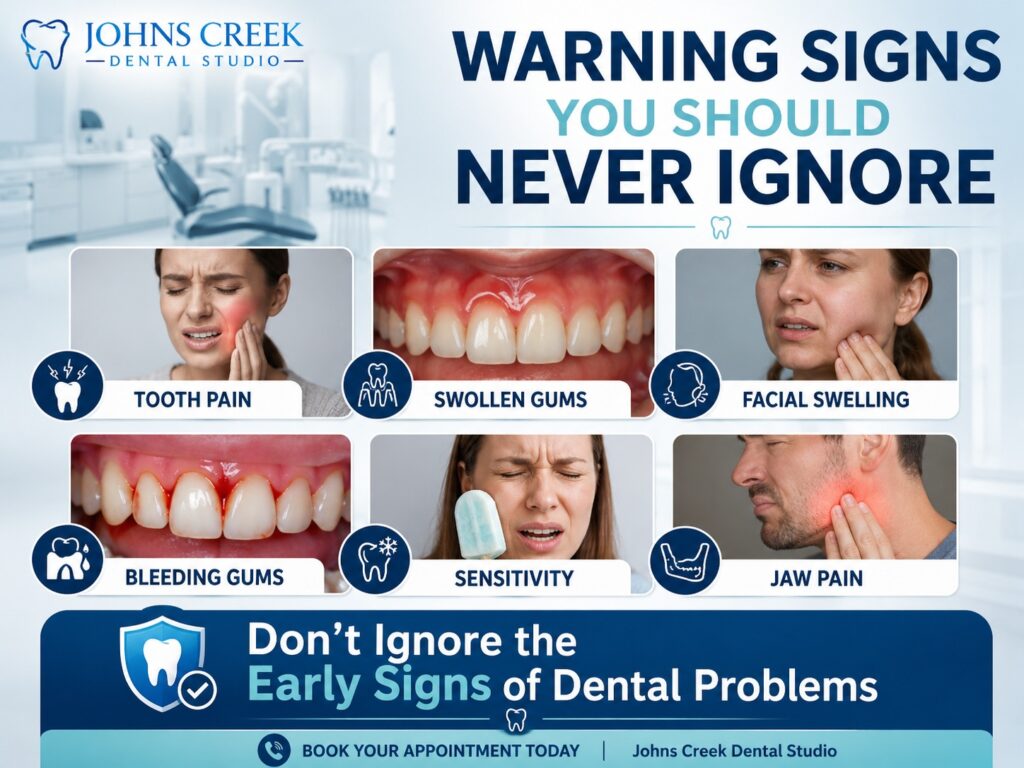
Patients experiencing the following concerns should schedule an evaluation as soon as possible:
- Persistent tooth pain
- Swollen or bleeding gums
- Sensitivity that continues worsening
- Pain while chewing
- Cracked or chipped teeth
- Jaw discomfort
- Loose teeth
- Facial swelling
- Sudden bad breath that does not improve
These dental emergency signs may indicate underlying problems that require urgent dental care. Waiting too long can increase discomfort and limit treatment options.
Understanding when to see a dentist can help patients avoid preventable complications later.
Delaying Treatment Often Makes Procedures More Extensive
One of the biggest problems with postponing care is that dental conditions rarely remain stable.
A tiny cavity may only require a simple filling during the early stages. However, months of delay may allow decay to spread into the nerve, increasing the likelihood of needing more advanced treatment.
Similarly:
- Minor gum inflammation may progress into periodontal disease
- Small cracks can deepen and weaken the tooth
- Worn enamel may lead to increased sensitivity
- Untreated infections can spread further into the surrounding tissue
The effects of untreated dental problems are often progressive rather than temporary. Early dental treatment benefits patients by reducing the likelihood of more invasive procedures later.
Why Preventive Dental Visits Matter
Many serious dental problems begin silently before pain develops. This is why regular checkups remain such an important part of long-term dental health.
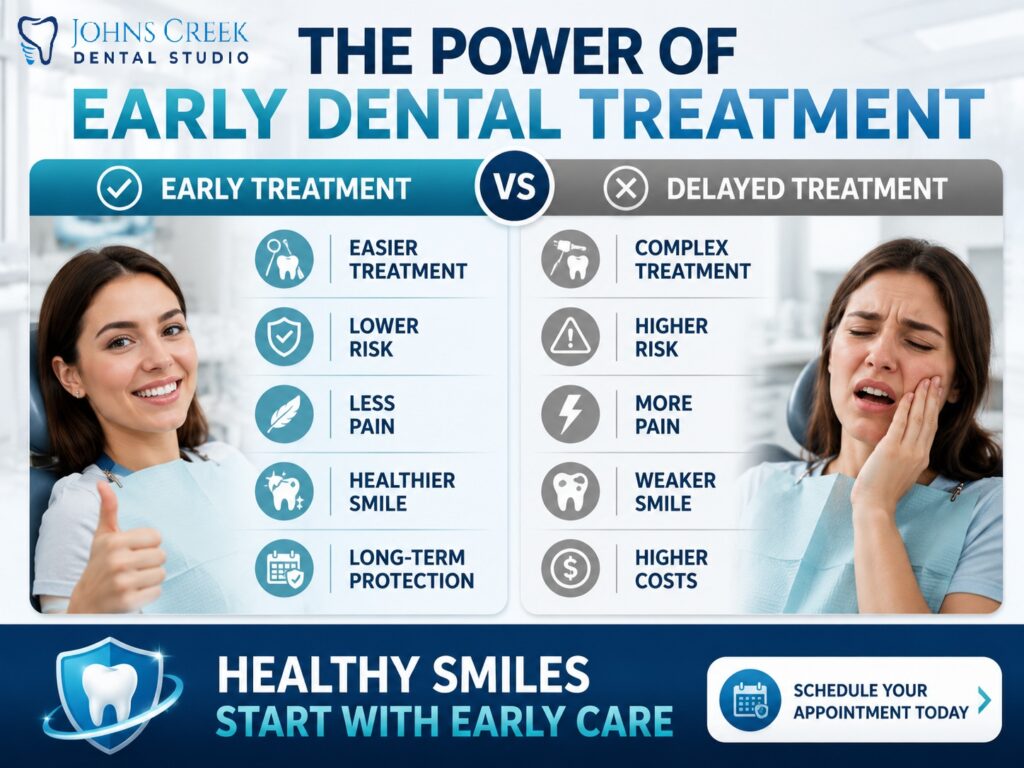
Routine visits allow dental professionals to:
- Detect cavities early
- Monitor gum health
- Evaluate bite problems
- Identify enamel wear
- Check for signs of infection
- Remove plaque buildup
The importance of dental checkups extends beyond cleaning teeth. Preventive care helps patients stay ahead of problems so they are easier to manage.
Healthy daily habits also matter. A strong oral hygiene routine combined with regular professional care provides one of the best defenses against future complications.
When Dental Pain Becomes an Emergency
Not every toothache requires immediate emergency treatment. However, certain symptoms should never be ignored.
Patients should contact an emergency dentist whom Alpharetta residents trust if they experience:
- Severe swelling
- Fever alongside tooth pain
- Difficulty swallowing
- Facial pressure
- Bleeding that does not stop
- Sudden trauma to the teeth
- Intense throbbing pain
These symptoms may indicate infection or structural damage requiring urgent evaluation.
Protect Your Smile Before Problems Worsen
Dental problems rarely improve by waiting. In many situations, delays simply allow damage to progress further beneath the surface. Small concerns today can become painful complications tomorrow if they are left untreated for too long.
Taking action early helps protect your comfort, oral function, and overall health. Whether you are dealing with sensitivity, gum irritation, or ongoing discomfort, visiting a local dentist whom Alpharetta patients rely on can help you address concerns before they become more serious.
If you have noticed changes in your oral health, now is the right time to schedule an appointment at Johns Creek Dental Studio for professional dental care that Alpharetta, GA, patients can depend on for long-term smile protection.
Questions People Ask About Dental Treatment
Can delaying dental treatment lead to permanent tooth damage?
Yes. Small dental problems can worsen significantly when treatment is postponed. Untreated decay, infections, or gum disease may eventually damage the tooth structure, nerves, or supporting bone. Early treatment often helps preserve natural teeth and prevents more complicated oral health concerns later.
What are the warning signs that a dental problem is becoming serious?
Persistent pain, swelling, bleeding gums, sensitivity, jaw discomfort, and difficulty chewing may indicate a more advanced problem. Dental infections can also cause facial swelling or fever. These symptoms should not be ignored because delayed care may increase the risk of long-term complications.
How quickly can a cavity become worse without treatment?
The progression varies depending on oral hygiene, diet, and overall health. However, cavities continue spreading once bacteria penetrate the enamel. What begins as minor decay can eventually reach the tooth nerve, increasing the likelihood of infection, severe discomfort, or more extensive treatment needs.
Why do dentists recommend treating gum disease early?
Early gum disease is often reversible with professional care and improved oral hygiene habits. Once the condition progresses deeper below the gums, bone and tissue damage may occur. Early treatment helps reduce inflammation, protect supporting structures, and lower the risk of tooth loss later.
When should tooth pain be considered a dental emergency?
Severe pain, swelling, fever, facial pressure, or pain that disrupts sleep may indicate infection or nerve involvement. Sudden trauma, uncontrolled bleeding, or difficulty swallowing also require immediate attention. Prompt evaluation helps prevent complications and supports faster, more effective treatment outcomes.
Can preventive dental visits reduce future dental problems?
Yes. Routine dental visits help identify concerns before symptoms become severe. Professional cleanings, examinations, and X-rays allow early detection of cavities, gum disease, infections, and bite issues. Preventive care supports long-term oral health while helping patients avoid more complex treatment later.