Good oral hygiene is essential for everyone, and even the most diligent brushers can be surprised by dental problems. For Alpharetta citizens with beautiful smiles, some dental problems seem to occur more often than others. Whether it’s due to lifestyle or genetics, it’s important to understand these problems and how to prevent them.
In this blog, we will discuss seven common dental problems felt by residents of the Alpharetta community. If you want a healthy, beautiful smile, you can now take the necessary preventive measures. Let’s discuss the dental problems and how you can prevent them from affecting your teeth and gums.
Common Dental Problems and How to Prevent Them
In this section, we’ll take a closer look at the seven dental concerns people in Alpharetta commonly face. With an overall understanding of these concerns and some basic preventive techniques, individuals can maintain optimal oral health throughout their lives and prevent future problems. With that being said, here’s what you need to know:
1. Tooth Decay
Tooth decay, commonly referred to as cavities, is without a doubt one of the prevailing dental conditions not only throughout Alpharetta but all over the world. This dental condition results from bacteria in the mouth that attack sugar, producing acid that erodes enamel on the affected teeth.
Prevention Tip:
Brushing regularly, at least twice a day, using toothpaste that contains fluoride, and flossing can help reduce the risks of tooth decay. Reducing consumption of sugary snacks and drinks, which feed bacteria and can increase the risk, can also reduce the risk. Visiting a dentist in Alpharetta regularly helps.
2. Gum Disease
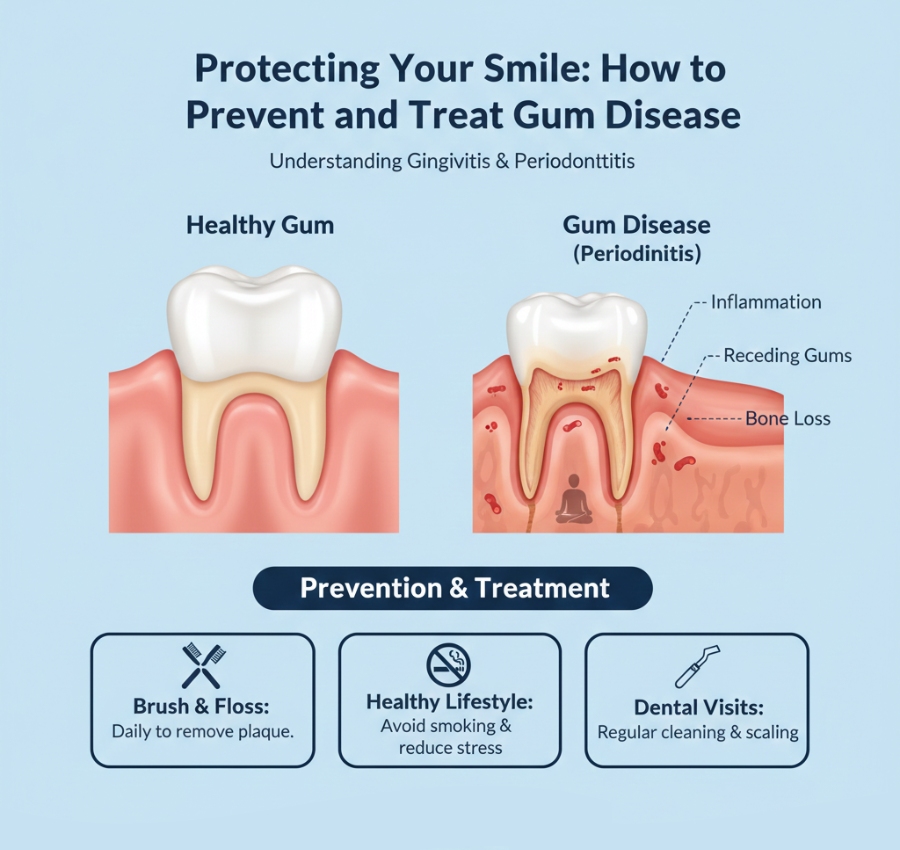
Gum disease begins with a condition called gingivitis. Gingivitis is the inflammation of the gums. It progresses to a more serious and painful condition if left untreated, known as periodontitis, and if severe enough, it can even lead to the loss of your teeth and influence other health issues in general.
Prevention Tip:
Brushing and flossing are the primary ways to prevent gum disease. Smokers as well as persons exposed to stress risk suffering from gum disease. Consult a dentist if you have gum disease; they may perform scaling and/or root planing.
3. Teeth Sensitivity
Tooth sensitivity is another problem residents in Alpharetta may face, as they may feel pain when consuming hot or cold foods and drinks. This arises from worn or receding gums that expose sensitive areas on one’s teeth.
Prevention Tip:
When brushing teeth, consider using a soft-bristle toothbrush to avoid wearing away the enamel. You may also use toothpaste intended to combat tooth sensitivity, as it helps block pain signals to the tooth. In case you are having receding gums, you may seek professional assistance from your dentist to help protect the tooth roots.
4. Bad Breath (Halitosis)
Halitosis, or bad breath, is a common condition that can be embarrassing and affect your social life significantly. While it is generally the result of poor dental care, it can also indicate other serious conditions, such as gum disease or tooth decay.
Prevention Tip:
Maintaining brushing and hydration habits can keep your mouth moisturized, allowing for fresh breath. If your bad breath does not go away, there may be an underlying issue, and a professional in Alpharetta can help resolve it.
5. Teeth Grinding (Bruxism)
Teeth grinding, or bruxism, is a condition in which people grind their teeth. This can occur while they are asleep. The result is tooth wear, jaw pain, and headaches. Stress is a leading cause of bruxism.
Prevention Tip:
If you think you are grinding your teeth, you should consult a dentist and get a recommendation for a custom-made nightguard to wear while you sleep. In addition, reducing stress through relaxation techniques and therapy can help reduce teeth-grinding habits.
6. Tooth Erosion
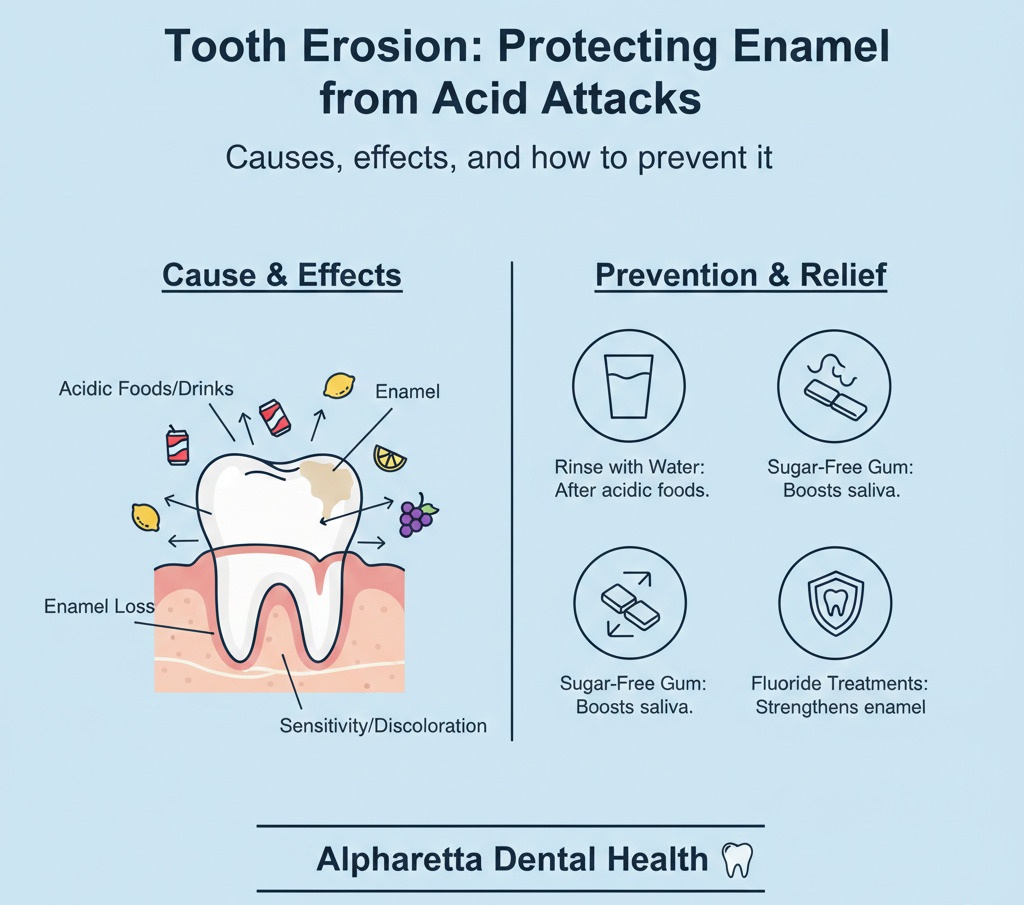
Tooth erosion is defined as the loss of your teeth’s enamel resulting from acidic food products and drinks, including citrus fruits, soda, and wine, which consequently may cause sensitivity, discolored teeth, and an increase in cavities.
Prevention Tip:
Reduce the amount of acidic food and drinks you consume, and if you do, try to rinse your mouth with water afterwards. Chewing sugar-free gum might also help you produce more saliva, which would counteract the effects of the acids. Your dentist could also provide you with fluoride treatments to help strengthen your enamel.
7. Oral Cancer
While less prevalent, oral cancers remain a concern in the Alpharetta area. Smoking, drinking alcohol, and human papillomavirus are the contributing factors that cause oral cancers. Early detection is key to successful treatment of these diseases.
Prevention Tip:
Regular check-ups with your dentist are very important because they can detect oral cancer early. When you go for a check-up, they will screen for oral cancer. You can prevent it by avoiding tobacco and alcohol.
Effective Oral Hygiene Habits for a Healthy Smile
To begin, there are fundamental yet effective practices in keeping good oral hygiene. By practicing these, you can reduce the risk of developing serious oral problems, such as cavities, gum disease, and bad breath. Here are some of the fundamental teeth and gum hygiene practices:
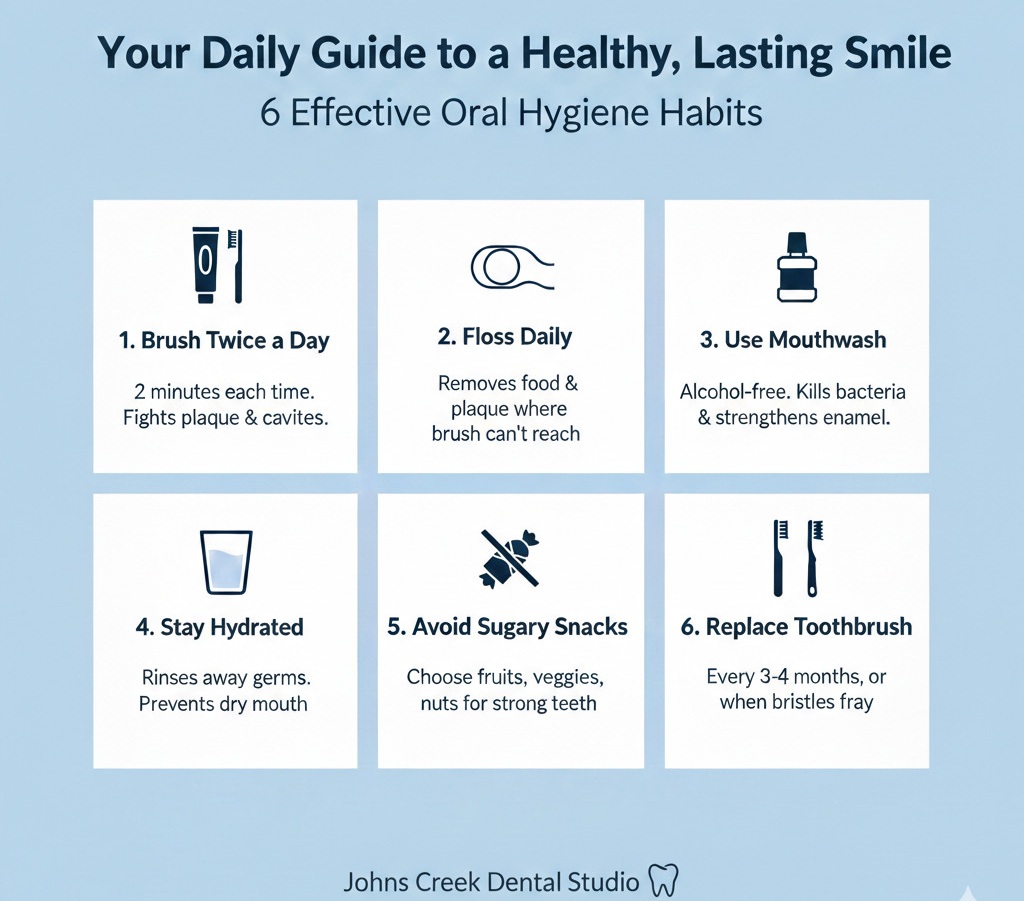
1. Brush Twice a Day
Brushing your teeth at least two times a day for two minutes each will also reduce cavities and prevent the formation of a sticky film called plaque. Use a toothbrush and toothpaste, and brush your teeth gently.
2. Floss Daily
Flossing is an important way to remove food and plaque from areas your toothbrush cannot reach. It can help you avoid gum disease and cavities.
3. Use Mouthwash
A mouthwash containing fluoride reduces bacteria, fights bad breath, and strengthens your enamel. Choose an alcohol-free mouthwash, as it will have a longer-lasting effect.
4. Stay Hydrated
Drinking water throughout the day helps wash away food particles and germs, keeping gums healthy and preventing dry mouth, which can cause cavities.
5. Avoid Sugary Snacks
Foods that are high in sugar feed the bacteria that cause tooth decay. Healthy snacks include fruit, vegetables, and nuts to support strong, healthy teeth.
6. Replace Your Toothbrush Regularly
Change your toothbrush every three to four months, or sooner if the bristles are frayed. This is because a worn-out toothbrush will not clean your teeth effectively.
Protect Your Smile with Regular Checkups
By being proactive and maintaining good oral health practices, it is possible to avoid frequent dental problems. It is possible to avoid frequent dental issues with the help of a dentist in Alpharetta.
If you are concerned about any of these issues or would like to come in for a routine check-up, contact us today at Johns Creek Dental Studio. We are here to help you maintain a beautiful and healthy smile for years to come. Don’t wait, call us to schedule your appointment now and get the smile you have always wanted!
Video Source: American Dental Association (ADA). This video is embedded from YouTube for educational and informational purposes only. All rights belong to the original creator.
Questions People Ask About Dental Problems
How often should I visit the dentist?
Regular dental check-ups every six months are essential for maintaining good oral health. These visits help identify potential issues early, prevent cavities, and ensure your gums are healthy, allowing for timely treatment and preventing future complications.
What is the best way to prevent tooth decay?
Brushing twice daily with fluoride toothpaste, flossing regularly, and reducing intake of sugary foods are key to preventing cavities. Additionally, routine dental visits for professional cleanings help remove plaque buildup and maintain healthy enamel, further preventing decay.
What can I do if I have sensitive teeth?
Use toothpaste designed for sensitive teeth, which helps block pain signals. Avoid extremely hot or cold foods and beverages, and consider using a soft-bristled toothbrush. If sensitivity persists, visit your dentist to explore potential treatments or underlying causes.
How can I stop grinding my teeth?
Teeth grinding can often be reduced by using a custom-made nightguard. Stress management techniques, such as relaxation exercises or therapy, can also help. If you’re grinding during the day, consciously relaxing your jaw can alleviate tension.
Why do I have bad breath?
Bad breath can stem from poor oral hygiene, gum disease, or other health conditions. Brush and floss regularly, clean your tongue, stay hydrated, and avoid foods like garlic. If bad breath persists, consult your dentist to rule out underlying issues.
What can I do to protect my teeth from enamel erosion?
Limit acidic foods and beverages, and rinse your mouth with water afterwards. Use fluoride toothpaste to strengthen enamel, and chew sugar-free gum to stimulate saliva production. Regular dental check-ups also help identify early signs of enamel erosion.