
A toothache can disrupt your routine in an instant. It can start as mild sensitivity, before it becomes something that interferes with eating, speaking, or resting comfortably. A lot of people try to wait it out, assuming it will just go away, but that usually leads to more severe issues.
If you are facing tooth pain in Alpharetta, GA, knowing when to take action can help. Some symptoms can be managed for a while, but others need immediate attention. Whether you’re in Johns Creek, Duluth, Suwanee, or nearby areas, understanding the distinction may help protect your oral health and spare you unnecessary complications. In this blog, you will learn how to detect tooth pain and which signs you should never ignore.
Severe tooth pain or swelling? Don’t wait—call your Alpharetta emergency dentist today: (770) 751-1500
What Causes Tooth Pain?
The pain of a tooth is typically due to an underlying issue, not the predicament itself. Knowing the cause helps inform how impatient to be and what kind of care is needed. In most cases, discomfort starts subtly and progresses over time, so early identification is crucial.
The source of discomfort can be in the tooth structure itself, the surrounding gums, or even deeper tissues. Recognizing these common causes can guide your decision about when to get timely care and prevent complications.
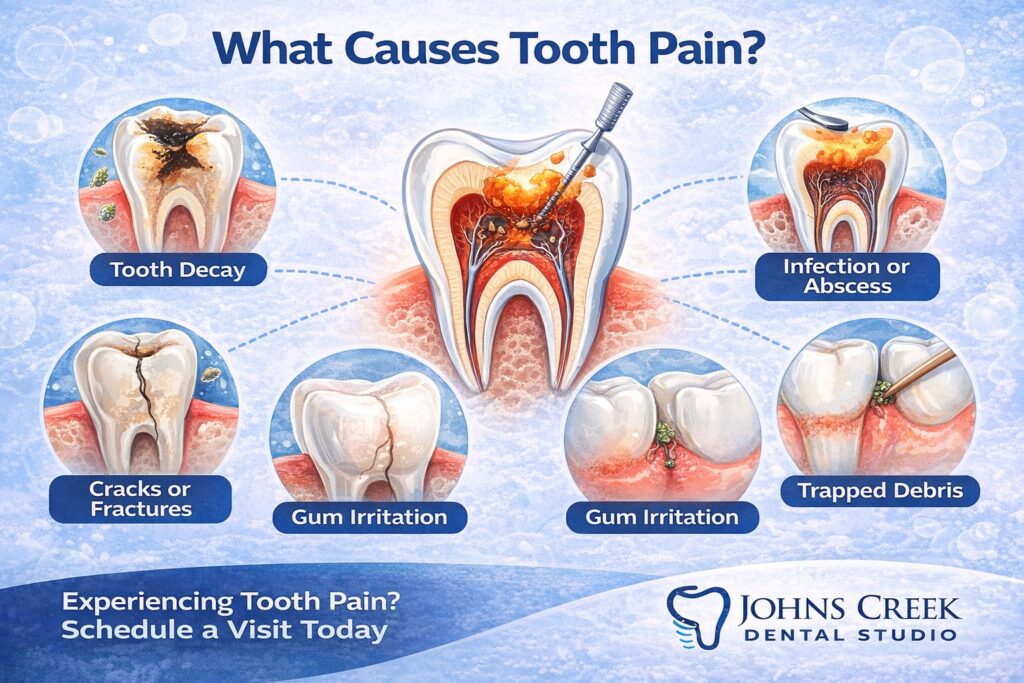
- Tooth Decay: Over time, cavities erode enamel, exposing the more sensitive inner layers of teeth, which can become painful and cause deeper pain if left untreated.
- Infection or Abscess: Bacteria buildup inside the tooth can get to the pulp, leading to swelling and pressure that cause severe throbbing pain that may radiate.
- Cracks or Fractures: Even the smallest, usually unnoticed crack can expose nerves and cause sharp discomfort when chewing or in response to temperature changes.
- Gum Irritation: Gum irritation, which means inflammation and/or gum recession, exposes tooth roots, making them more sensitive and painful during brushing or eating.
- Trapped Debris: Small bits of food lodged between teeth can cause gum irritation and pain, or lead to infection if not properly cleaned.
Signs You Should Not Ignore
Some specific symptoms indicate that your tooth pain requires immediate attention. Catching them early can help avoid more serious problems later.
- Chronic Pain: Continuous pain that does not improve with time.
- Swelling: Significant swelling of the gums, face, or area around your jaw.
- Fever or Malaise: Systemic symptoms that might indicate infection.
- Bad Taste or Smell: Could indicate some drainage/infection.
- Pain on Biting: Sensitivity while chewing or putting pressure.
- Irritability: Long-term response to hot or cold foods.
If you face any of these symptoms, it is best to contact an emergency dentist in Alpharetta for prompt care.
When Tooth Pain Becomes Urgent
Certain circumstances may require you to visit right away rather than wait for a regular appointment. These signs usually signal an unfolding emergency.
Some of the following features are considered critical in assessing risk:
- Aggressive swelling: The swelling extends toward the eye, neck, or jaw.
- Difficulty swallowing or opening the mouth: Signs of deeper infection
- Dental trauma: A knocked-out or fractured tooth after an injury.
- Uncontrolled bleeding: Bleeding that doesn’t respond to basic care.
In such instances, the immediate solution would be visiting a local dentist in Alpharetta.
Risks of Delaying Treatment
Tooth problems left untreated can have implications that extend beyond oral health. Early care often prevents escalation.
- Infection Spread: Bacteria may spread from the tooth into nearby tissues.
- Tooth Damage: Continued structural damage may leave few treatment options.
- Increased Discomfort: Pain can get more severe and difficult to control.
- Sinusitis: Untreated colorectal infections cause sinusitis.
Common Conditions Behind Tooth Pain
Familiarity with common conditions can help you determine why the pain is happening and how urgent the situation might be. Tooth pain usually stems from a dental problem that may become more severe if not treated early. Some conditions can start as mild, benign discomfort but quickly turn into something more serious.
Catching these complications early enables you to receive prompt treatment and avoid damage to your teeth and gums. Awareness of these conditions may help you decide when to get immediate attention.
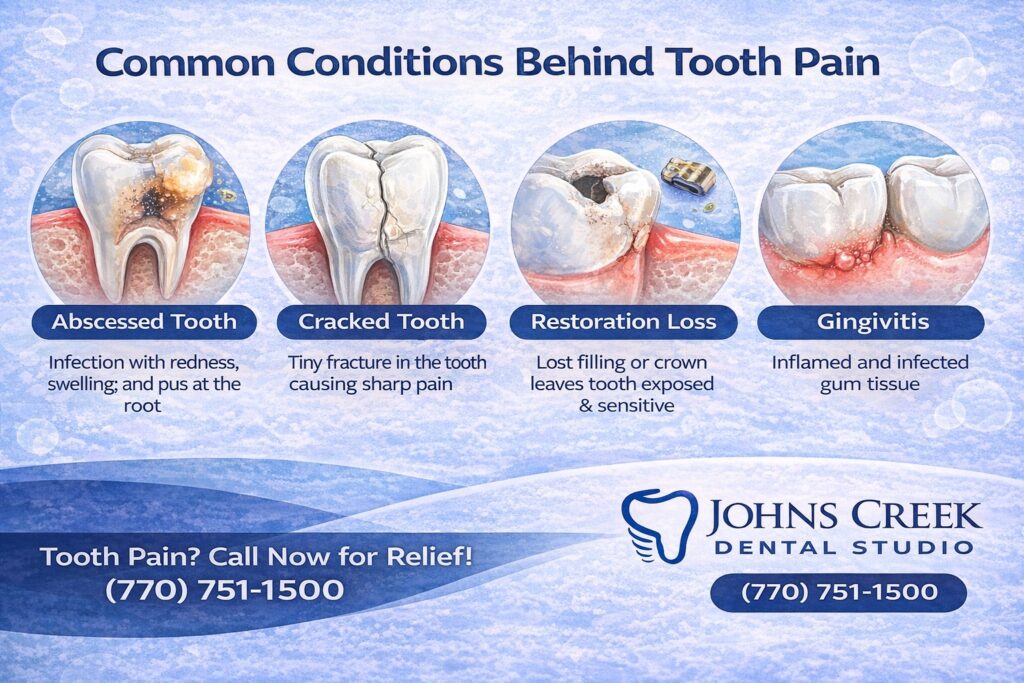
- Abscessed Tooth: A localized collection of pus around the root of a tooth or in the surrounding gums, often painful (throbbing pain), swollen, and sensitive. It can also cause fever or a chronic bad taste if left untreated.
- Cracked Tooth: Tiny or concealed cracks in the tooth structure, sometimes subtle, can cause sharp pain but are easier to detect.
- Restoration Loss: Dental fillings or crowns that have fallen out may expose the underlying layers of the tooth, leading to increased sensitivity to temperature and pressure. It can also make the tooth more susceptible to further damage.
- Gingivitis: Inflamed or infected gum tissue can become tender, swollen, and painful, and, if left untreated, can worsen an individual’s overall oral health.
What To Do Before Your Visit
In the interim, simple measures might help alleviate discomfort.
- Salt Water Rinse: Will help soothe irritation and keep the area clean.
- Cold Compress: Can help reduce swelling and soothe pain.
- No Pressure: Don’t chew on that side.
- Keep Your Head Elevated: Resting in an elevated position may help minimize throbbing.
- Use Pain Relief Carefully: If taking an over-the-counter pain-reliever, follow the instructions on the package closely.
The steps provide some short-term relief, but cannot replace a professional evaluation.
What Happens During an Emergency Visit
Emergency care focuses on figuring out what’s causing your pain and then relieving it. This step is designed to be quick and handle immediate concerns without letting the problem get worse. During your visit, we will not only want to manage your pain but also determine its cause and how we can treat it effectively. Every step is intended to ensure that you get care promptly and that you know what happens next, if further treatment is necessary.
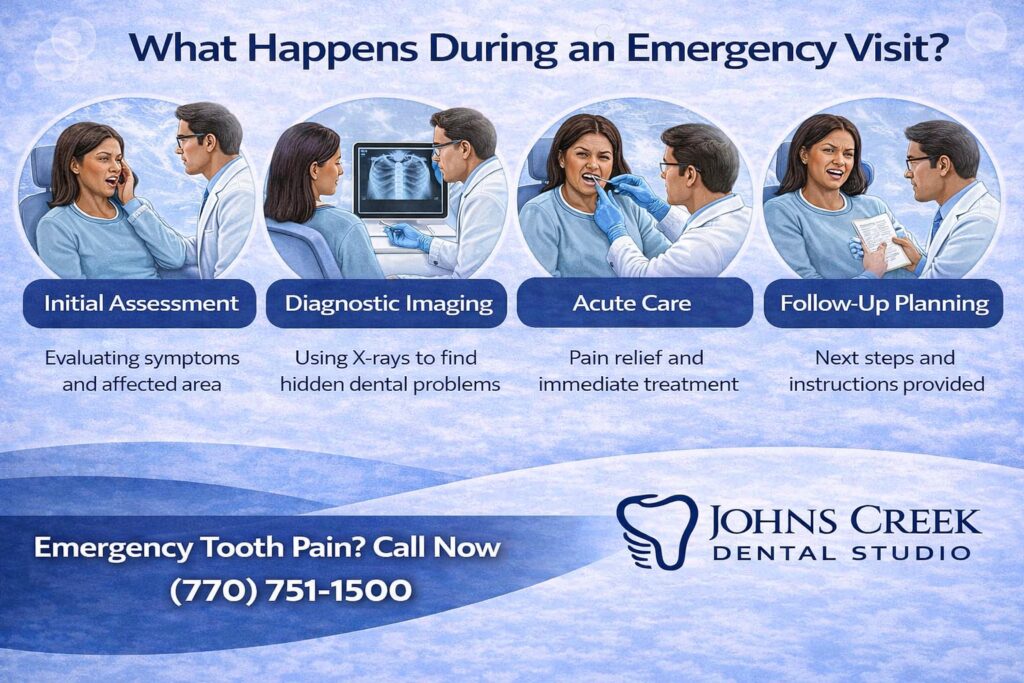
- Initial Assessment: The first step involves a thorough evaluation of your symptoms, medical history, and the affected area to assess the severity and urgency of the condition.
- Diagnostic Imaging: X-rays or other imaging methods are used to detect underlying problems such as infections, fractures, or trauma that may not be visible directly.
- Acute Care: Pain, inflammation, or infection is treated to stabilize the issue.
- Follow-Up Planning: Instructions are provided and next steps discussed for long-term healing and prevention of recurrence.
It is best to visit an emergency dentist near Alpharetta so you can address the underlying problem immediately and avoid delays.
Why Acting Early Matters
Receiving care in a timely manner can improve outcomes and help preserve long-term oral health. Waiting to be treated usually results in more complicated issues.
- Retains Tooth Structure: Prevents significant deterioration.
- Minimize all complications: Prevent the spread of infection.
- Faster Restores Comfort: Targets pain at the source.
- No Later Problems: Adequate treatment is the way to avoid later problems.
People with busy lifestyles near State Bridge Road or Newtown Park may postpone early intervention. However, it is highly recommended as it leads to improved results.
Follow Up On Your Path to Relief
Because tooth pain is never something to be ignored, particularly if it lasts or gets worse. But paying attention to early signs helps you take charge of your oral health before complications set in.
Johns Creek Dental Studio is about finding the cause of discomfort and providing an effective solution. Scheduling a visit if your symptoms seem urgent can help you feel comfortable again and protect your long-term oral health.
Questions People Ask About Tooth Pain
How can I tell if my tooth pain is an emergency?
Severe pain, swelling, fever, or difficulty eating may indicate an urgent issue. These symptoms often suggest infection or structural damage, requiring prompt evaluation to prevent complications and ensure proper treatment.
Can a tooth infection spread if untreated?
Yes, untreated infections can spread to surrounding tissues and even other areas of the body. This progression can lead to more serious health concerns, making early diagnosis and treatment important for preventing complications.
Is it safe to wait a few days with tooth pain?
Mild discomfort may be monitored briefly, but persistent or worsening pain should not be ignored. Waiting too long can allow the underlying issue to progress, potentially leading to more complex treatment needs.
What should I avoid when dealing with tooth pain?
Avoid chewing on the affected side, exposing it to extreme temperatures, and using harsh home remedies. These actions can increase irritation and delay healing, especially if the underlying cause has not been treated.
Why does tooth pain feel worse at night?
Pain often intensifies at night due to increased blood flow when lying down. This can create pressure within the tooth, making discomfort more noticeable and difficult to ignore during rest.
Can tooth pain stop without treatment?
Pain may temporarily subside, but the cause usually remains. Without proper care, the issue can return or worsen, making it important to seek evaluation even if symptoms improve briefly.