Bleeding gums can sneak up on you. You may feel it while brushing, flossing, or even when eating something tough, like an apple. At first, it may seem minor. But your gums don’t bleed for no reason. It’s your body telling you that something is amiss.
Bleeding gums may resolve on their own, which is what many people in the Alpharetta and Johns Creek area assume. However, dismissing those early cues could lead to more complex oral problems. Knowing the “why” behind the cause of bleeding gums is a crucial first step toward protecting your smile and preventing damage in the long run.
What Causes Gums to Bleed?
Bleeding gums are usually symptomatic of irritation or inflammation. Plaque buildup along the gumline is the most common cause. If plaque isn’t removed regularly, it hardens into tartar and irritates the surrounding tissue.
Below are some of the most common reasons for which gums bleed:
- Gingivitis (early gum inflammation): The first stage of gum disease that leads to redness, swelling, and bleeding.
- Bad oral hygiene habits: Irregular brushing or flossing causes bacteria to build up.
- Hard brushing: Applying too much pressure or using a hard-bristled toothbrush can be harmful to the gum tissue.
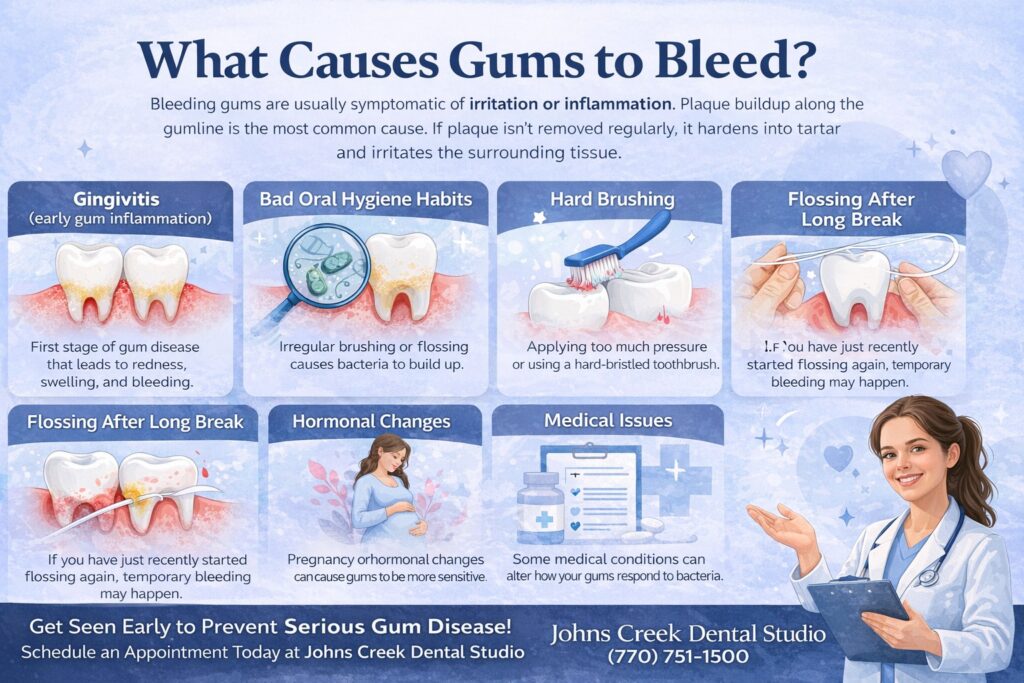
- Flossing after a long break: If you have just recently started flossing again, temporary bleeding may happen.
- Hormonal changes: Pregnancy or hormonal changes can cause gums to be more sensitive.
- Medical issues: Some medical conditions can alter how your gums respond to bacteria.
Left alone, gingivitis can lead to more serious gum disease. Alpharetta patients often need to be seen as symptoms worsen.
Can Bleeding Gums Be Reversed?
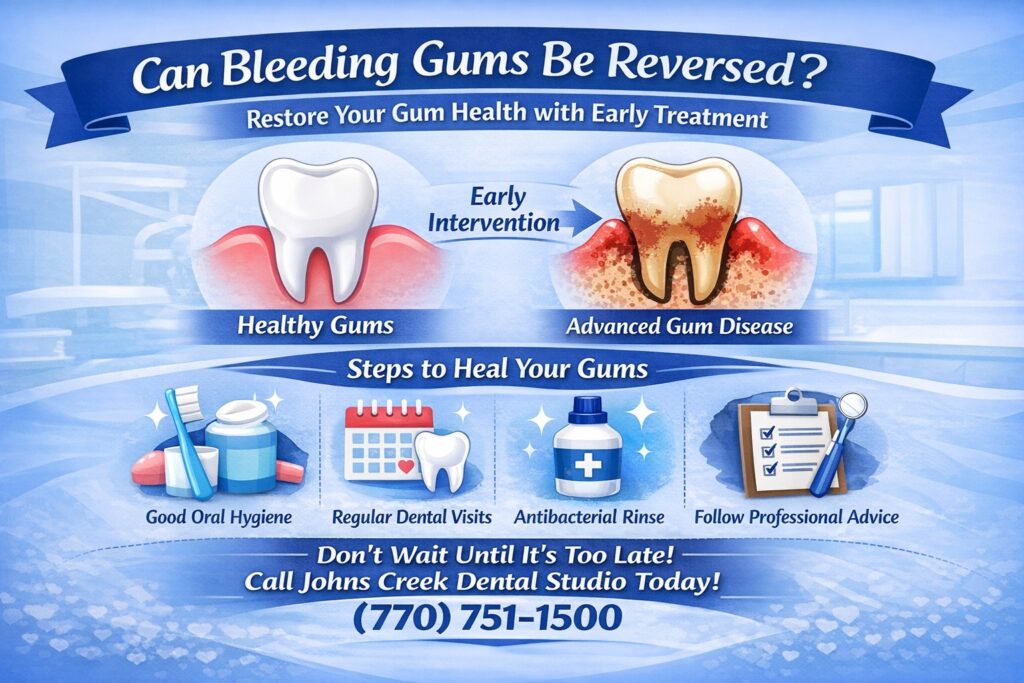
The good news is that you can often reverse early-stage gum problems. Treating it early can help reduce inflammation and restore gum tissue health.
Steps that counter early damage include:
- Maintaining consistent oral hygiene.
- Scheduling regular cleanings.
- Using antibacterial mouth rinses.
- Following professional guidance.
However, when the condition has advanced beyond gingivitis, professional assistance is required. Depending on the extent of damage, gum disease treatment in Alpharetta varies. The earlier you treat it, the less damage there is, and when it’s in advanced stages, we focus on restoring blood circulation in the gums by healing them to halt further destruction.
Early Signs You Shouldn’t Ignore
Bleeding is often only a piece of the puzzle. Your gums may already be sending you other warning signs that are easy to miss during your daily routine.
Watch for these early indicators:
- Red or swollen gums
- Tenderness when brushing or flossing
- Persistent bad breath
- Receding gumline
- A metallic taste in the mouth
These may seem like mild symptoms, but they can be signs of low-grade inflammation lurking beneath the surface. Dealing with them early on can stop anything worse from developing.
Why Bleeding Gums May Worsen Over Time
Without intervention, gum health typically does not improve. Plaques and bacteria that linger along the gumline irritate the tissue. Over time, this can cause deeper pockets to form between your teeth and gums.
As the condition progresses:
- Gums can start to pull away from teeth.
- The bone that supports the teeth can weaken.
- Teeth may feel loose or move out of position.
- Infections might form below the gumline.
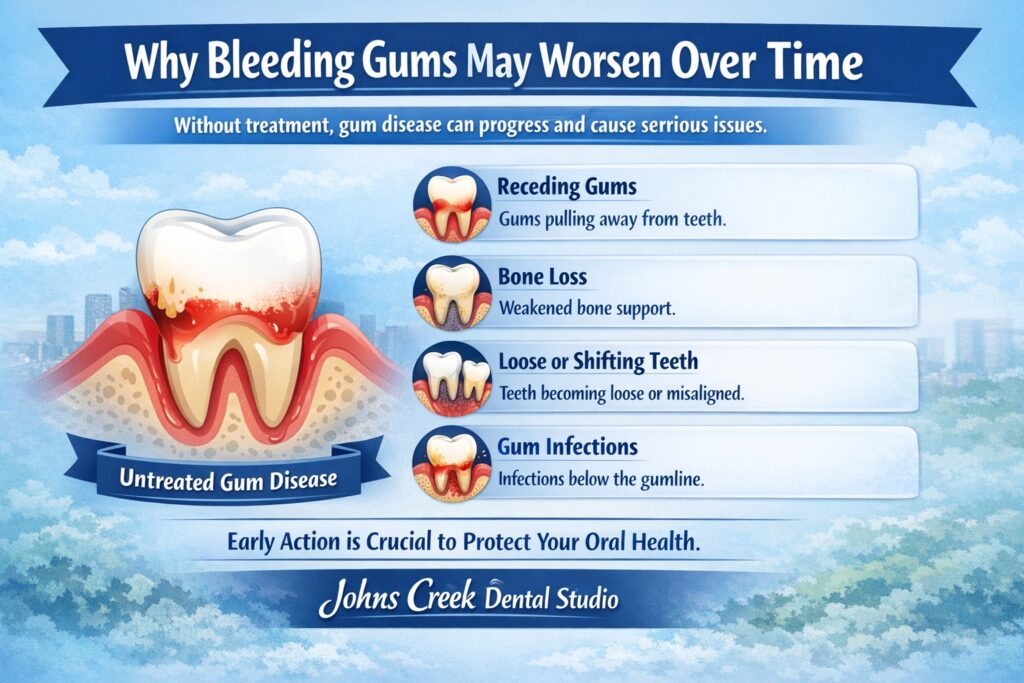
That is why taking early action is important. It can start as tiny seepage yet eventually compromise your overall oral stability.
Are You Brushing Correctly?
Sometimes, it’s not whether you brush that matters; it’s how you brush. Most people are inadvertently using one of these methods, which can irritate their gums instead of protecting them.
To support healthy gums:
- Use a soft-bristle toothbrush.
- Use a gentle, circular motion while brushing instead of scrubbing.
- Position the bristles at a 45-degree angle from the gumline.
- Change your toothbrush every three months.
- Do not brush immediately after eating acidic food.
This one change to a daily ritual could prevent irritation and allow your gums to recover over time.
The Importance of Flossing for Gum Health
That is an effective aid to prevent bleeding gums. It clears away debris and plaque from places your toothbrush can’t reach.
If your gums bleed when you floss, don’t skip it. This is usually a symptom of inflamed gums, not that flossing hurts you. Instead:
- Floss gently but consistently
- Wrap the floss around each tooth
- Don’t snap floss in your gums
- Add it to your evening habit
With regular care, bleeding typically subsides once your gums are healthier.
When Should You Be Concerned?
It is not always serious and may cause occasional bleeding. But there are some patterns that suggest it’s time to start taking the issue more seriously.
You need professional care if:
- Bleeding happens daily
- Your gums are still swollen or painful
- You notice gum recession
- Your teeth feel loose
- Symptoms last for longer than a week
These signs could mean your gums need more than just better home care.
How Lifestyle Habits Can Harm Your Gums
Your everyday behaviour can, in fact, impact your gum health. Even small decisions, repeated day after day, may promote healing or exacerbate inflammation.
Think about the factors that come into play:
- Diet: Sugar and processed foods lead to tartar formation.
- Hydration: Dryness of the mouth decreases your natural defense against bacteria.
- Smoking: Tobacco damages gum tissue and impairs healing.
- Stress: May affect immune system response and oral health.
If stopping for coffee on your way to Avalon is a regular thing, or if you skip meals on busy days, your routine may be unwittingly hurting your gums. Small tweaks can have a measurable impact.
The Link Between Gum Health and Overall Health
Your gums aren’t just your teeth’s support system. And they’re strongly linked to your health overall. If left untreated, mouth inflammation can affect other parts of the body.
Studies have associated gum problems with:
- Heart health concerns
- Diabetes management challenges
- Respiratory issues
- Increased inflammation in the body

Maintaining healthy gums is about more than your smile. It’s all part of taking care of yourself.
Healthy Mouth, Healthy You: It Starts with Your Smile
Gum bleeding is often one of the things you ignore. Whether you’re heading out for a stroll along the Chattahoochee River or pulling a full workday, it’s easy to push oral health to the back burner. But small signs can signal more serious issues.
When It’s Time to Take the Next Step
If your gums have been bleeding with any regularity, it’s worth getting some clarity on what’s driving that. At Johns Creek Dental Studio, we seek the cause of the problem and direct you to the appropriate care.
Taking actions early can safeguard your smile for the rest of your life. Call us today, make an appointment and get on your way to healthier, pain-free gums.
Questions People Ask About Bleeding Gums
Why do my gums bleed even when I brush gently?
Bleeding during gentle brushing often indicates inflammation rather than brushing technique. Plaque buildup near the gumline irritates the tissue, making it sensitive. Even light contact can cause bleeding. Consistent cleaning and proper oral care can reduce inflammation and improve gum health over time.
Is it normal for gums to bleed when I start flossing?
Yes, especially if you haven’t flossed regularly before. Your gums may be inflamed, and flossing can initially cause bleeding. However, this usually improves within a few days as plaque is removed and your gums become healthier with consistent care.
Can bleeding gums heal on their own?
Mild gum inflammation may improve with better oral hygiene. However, if plaque and bacteria remain, the problem can worsen. Without proper care, bleeding gums can progress into more serious conditions that require professional treatment to restore gum health.
Are bleeding gums a sign of gum disease?
Yes, bleeding is often one of the earliest signs of gum disease. It usually starts as gingivitis, which is reversible. If left untreated, it can progress to more advanced stages that affect the bone and supporting structures of your teeth.
Should I stop brushing if my gums bleed?
No, stopping brushing can worsen the condition. Instead, continue brushing gently with a soft-bristled toothbrush. Maintaining good oral hygiene helps reduce plaque buildup and allows your gums to heal rather than worsening the inflammation.
How can I prevent my gums from bleeding again?
Focus on consistent daily care. Brush twice a day, floss regularly, and use a suitable mouth rinse. Regular dental visits also help remove buildup that cannot be cleaned at home, keeping your gums healthy and reducing the chances of bleeding.